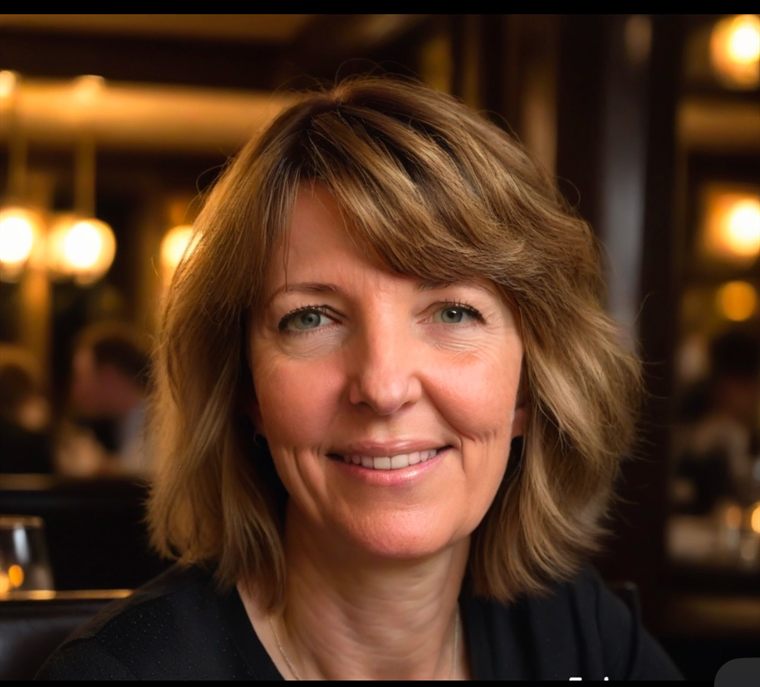
Dr. Todd's path to functional medicine began with what she watched happen to the people closest to her. Family members cycling through prescriptions for psoriasis, chronic allergies, and menopausal symptoms — conditions that were managed, not resolved. Conventional care, she came to understand, often treats the signal without ever investigating the source. That gap became the driving force behind everything she does.

The pattern repeated itself in her clinical practice. Patients carrying the weight of multiple chronic conditions, each one being managed with its own medication, none of them getting genuinely better. The question she kept returning to wasn't how do we quiet these symptoms — it was what is actually causing them. Functional medicine gave her a framework to answer it.

Moving past skepticism

She didn't arrive at functional medicine without doubts. Her concern early on was the evidence base — whether what she was hearing about root-cause care was grounded in real science or in well-packaged wishful thinking. What convinced her was the depth of the underlying research: functional medicine draws on physiological, biochemical, and genetic insights that are well-supported by current literature. It wasn't a departure from medicine — it was a more thorough application of it.

The transition wasn't frictionless. Colleagues questioned the approach; financial sustainability was uncertain; stepping outside established protocols carries professional risk. But she had come to believe that genuine healing often requires exactly that kind of departure from convention.

The shift to longevity medicine

The pivotal reframe in Dr. Todd's career came when she began looking seriously at the difference between biological age and chronological age. The insight — that how old your body functions matters far more than what year you were born — reshaped her entire approach. It shifted her orientation from reactive treatment toward proactive optimization: not waiting for disease to declare itself, but building the conditions for health before the warning signs arrive. That led her to deepen her training in longevity medicine, adding another dimension to her functional practice.

A case that defined the practice

One experience crystallized her approach more than any other. A patient with Hashimoto's thyroiditis was experiencing debilitating brain fog — and had been told, repeatedly, that her lab results looked normal. For most practitioners, that's where the conversation ends. Dr. Todd didn't accept it as a dead end.

She worked two tracks simultaneously: immediate symptom support to help the patient function day-to-day, and a methodical investigation into what was actually driving the immune dysregulation. The dual approach — stabilize now, resolve the root cause over time — is now central to how she works with every patient. The Hashimoto's case wasn't an outlier; it was a template.

The Bridge to Readiness framework

Dr. Todd practices through what she calls the "Bridge to Readiness" approach. The premise is simple: patients don't arrive at a functional medicine practice at the same starting point. They come with different histories, different levels of readiness for change, and different thresholds for what they're willing to take on. Imposing a single protocol regardless of where someone is starting from doesn't serve the patient — it serves the protocol.

Her approach instead meets people where they are. Conventional tools that provide immediate stabilization are used alongside a deeper root-cause investigation, so that improvement isn't either/or — it's both, unfolding on parallel tracks. Patient autonomy and individual pace aren't obstacles to good care; they're part of how good care actually gets delivered.

Looking ahead

Dr. Todd's broader goal is to help shift the culture of care from reactive sick-treatment toward proactive health optimization — particularly for patients living with autoimmune disease, hormonal imbalance, and chronic conditions who haven't found the answers they need in conventional settings. She wants patients to leave not just feeling better, but understanding why they feel better — and what to protect going forward.